
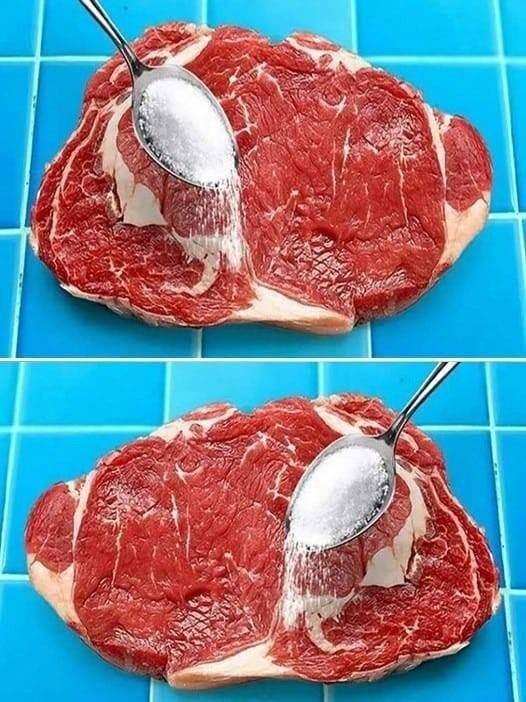
The chefs’ tip for making meat exceptionally tender: add this secret ingredient before cooking.
If you’ve ever wondered why restaurant steaks have that perfectly seasoned crust and a melt-in-your-mouth interior, the answer isn’t a rare spice or a high-tech gadget. It’s a simple process known as Dry Brining.
While many home cooks wait until the last second to season their meat, professional chefs know that adding salt 45 minutes to 24 hours before cooking is the ultimate game-changer for tenderness and flavor.
How the “Secret Ingredient” (Salt) Works
It might seem like salt would just dry the meat out, but a fascinating chemical reaction occurs when you give it time:
- Extraction: Initially, the salt draws moisture out of the meat through osmosis, creating a small pool of brine on the surface.
- Breakdown: The salt in that brine begins to break down the tight muscle proteins (specifically myosin).
- Reabsorption: As the proteins loosen, the meat reabsorbs the salty liquid back into the fibers.
The Result: The salt seasons the meat deeply—not just on the surface—and the relaxed proteins stay tender and juicy even under high heat.
How to Do It Properly
1. Choose the Right Salt
Skip the fine table salt. Use Kosher salt or Sea salt. The larger grains are easier to distribute evenly and won’t make the meat overly “salty” as quickly as fine grains do.
2. Season Generously
Sprinkle the salt from about 6 inches above the meat to ensure an even coating on all sides, including the edges.
3. The Waiting Game
- The “No-Go” Zone: Never cook meat that has been salted for only 5 to 10 minutes. At this stage, the moisture is still on the surface, which will steam the meat instead of searing it.
- The Minimum: Aim for at least 45 minutes.
- The Ideal: For thick cuts like Ribeye or Roasts, salt them and leave them uncovered in the fridge for 12–24 hours.
4. Pat Dry Before Cooking
Before the meat hits the pan, use a paper towel to pat the surface bone-dry. Since the salt has already worked its magic inside, removing surface moisture ensures you get that legendary, mahogany-colored crust (the Maillard reaction).