The Science of the Slice: The Ultimate 24-Hour Sourdough Margherita Pizza
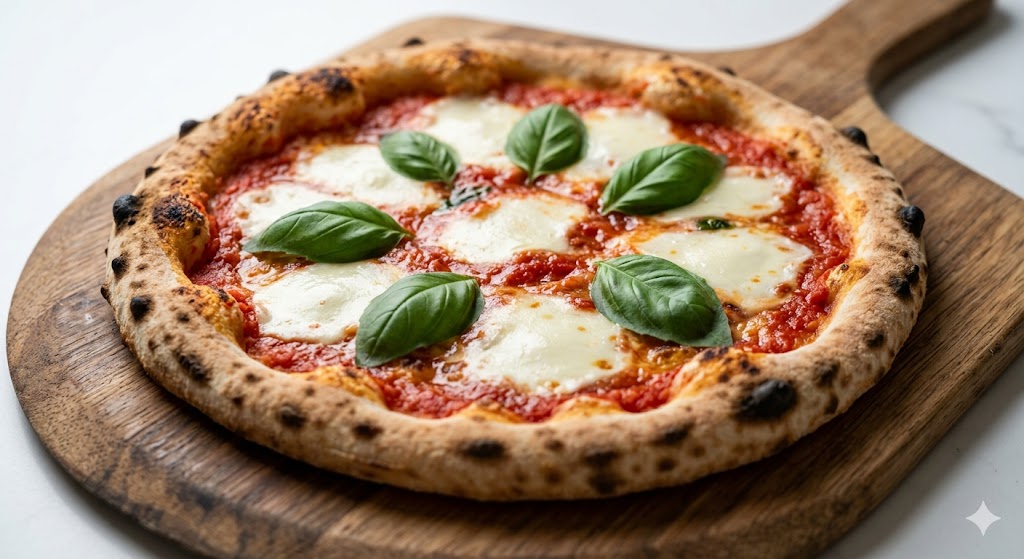
There is a profound difference between a pizza that is merely “good” and a pizza that is transformative. We’ve all had the former—doughy, perhaps a bit heavy, with toppings that slide off in a singular, oily sheet. But the latter? That is a symphony of textures. It features a crust that shatters upon impact before revealing a soft, airy interior (the cornicione), topped with a bright, acidic tomato sauce and creamy, melted buffalo mozzarella.
Achieving this level of mastery at home doesn’t require a wood-fired oven from Naples, though it does require one secret ingredient: Time.
By using a long-fermentation sourdough method, we unlock depths of flavor and digestibility that commercial yeast simply cannot match. In this guide, we will walk through the chemistry of the dough, the art of the stretch, and the precise mechanics of the home-oven bake.
The Philosophy of Ingredients
Before we touch the flour, we must respect the components. A Margherita pizza is deceptive; because there are so few ingredients, there is nowhere for low quality to hide.
- The Flour: Look for “Tipo 00.” This Italian milling standard is powder-fine, allowing for a silky dough that can stretch thin without tearing. It has a protein content usually around 12%, perfect for developing that elastic gluten network.
- The Tomatoes: San Marzano is the gold standard. Grown in the volcanic soil of Mount Vesuvius, they are sweeter and less acidic than standard canned tomatoes.
- The Cheese: Fresh Buffalo Mozzarella (Mozzarella di Bufala) provides a rich, tangy moisture. If using “fior di latte” (cow’s milk mozzarella), ensure it is packed in water, not the low-moisture “shredding” blocks found in the dairy aisle.
The Physics of the Dough
The hydration of this dough is set at 65%. This is the “sweet spot” for home bakers. It provides enough moisture to create steam (which leads to those beautiful air bubbles) without being so sticky that it becomes unmanageable for a beginner.
The relationship between water and flour can be expressed by the following baker’s percentage formula:
$$Hydration = \frac{Weight\ of\ Water}{Weight\ of\ Flour} \times 100$$
For our recipe, we use:
- 500g Tipo 00 Flour
- 325g Room temperature filtered water
- 100g Active Sourdough Starter (100% hydration)
- 12g Fine Sea Salt
Step-by-Step Instructions
Phase 1: The Autolyse and Mix
In a large ceramic bowl, whisk your sourdough starter into the water until it’s mostly dissolved and looks milky. Add the flour and mix by hand until a “shaggy mass” forms. Cover with a damp cloth and let it rest for 30 minutes.
Pro Tip: This resting period, known as the autolyse, allows the flour to fully hydrate and the gluten to begin forming spontaneously, making your kneading job significantly easier.
After the rest, sprinkle the salt over the dough. Fold the edges inward, pinching the salt into the dough.
Phase 2: Bulk Fermentation and “Stretch and Folds”
Instead of traditional kneading, we use “stretch and folds.” Every 30 minutes for the next 2 hours, reach under the dough, pull it upwards until you feel resistance, and fold it over itself. Rotate the bowl and repeat four times.
You will notice the dough transforming from a lumpy paste into a smooth, elastic skin. After the final fold, let the dough sit at room temperature for 4 to 6 hours (depending on the warmth of your kitchen) until it has grown by about 50%.
Phase 3: The Cold Proof
Place the dough in the refrigerator for 18 to 24 hours. This cold environment slows down the yeast but allows the lactobacilli to produce lactic and acetic acids. This is where the “sourdough” tang and the complex aroma come from.
Phase 4: Shaping and The “Final Rise”
Three hours before you plan to eat, take the dough out. Divide it into four equal portions (approx. 230g each). Tension is key here. Pull the edges of each piece toward the center to create a tight ball, then roll it on the counter to seal the bottom. Place these in individual oiled containers.
The Setup: Mimicking a Neapolitan Oven
Most home ovens max out at 250°C to 275°C (480°F to 530°F). A professional pizza oven hits 450°C (850°F). To bridge this gap, you need a Baking Steel or a Pizza Stone.
Place your stone on the highest rack of the oven and preheat for at least one hour. Then, switch to the Broiler (Grill) setting 10 minutes before sliding the pizza in. This creates intense “top-down” heat that mimics the rolling flames of a wood fire, giving you those “leopard spots” on the crust.
Assembly: The Art of Restraint
- The Stretch: Do not use a rolling pin! A rolling pin crushes the carbon dioxide bubbles you spent 24 hours creating. Instead, use your knuckles to gently push the air from the center toward the edges.
- The Sauce: Do not cook your sauce beforehand. Simply crush the San Marzano tomatoes by hand or with a fork, add a pinch of salt, and a leaf of torn basil. It will cook on the pizza, maintaining a fresh, bright flavor.
- The Bake: Slide the pizza onto the hot stone. It should take between 5 to 7 minutes. Watch for the edges to puff and char.
The Recipe Card
| Ingredient | Amount | Notes |
| Tipo 00 Flour | 500g | Higher protein, fine mill |
| Filtered Water | 325g | 20°C – 22°C |
| Active Starter | 100g | Fed 6–8 hours prior |
| Sea Salt | 12g | Avoid iodized salt |
| San Marzano Tomatoes | 1 Can (400g) | Hand-crushed |
| Buffalo Mozzarella | 250g | Drained and torn |
| Fresh Basil | 1 Bunch | Added after baking |
| EVOO | To taste | Extra Virgin Olive Oil |
Troubleshooting Common Issues
- Dough is too sticky: Your kitchen might be humid. Next time, reduce water by 10g. For now, use more flour on your hands, but avoid adding it to the dough itself.
- The crust is tough: This usually means the oven wasn’t hot enough, or the dough was over-handled. Ensure the one-hour preheat is non-negotiable.
- Soggy Middle: You likely used too much sauce or the mozzarella was too wet. Try slicing your mozzarella and letting it sit on paper towels for 30 minutes before using.
Conclusion: The Reward
When you pull that pizza out of the oven, the crust should crackle. The cheese should be bubbling but not browned to a crisp. Drizzle a little high-quality Extra Virgin Olive Oil and scatter fresh basil leaves—the heat from the pizza will release the herb’s oils instantly.
Eating a 24-hour sourdough pizza is a lesson in patience. You aren’t just making dinner; you are cultivating a living culture and applying physics to transform humble flour and water into a masterpiece.
Buon Appetito!
Visualizing the Recipe
To generate the perfect high-resolution image for this article, you can use the following prompt with my image tool: